America Needs Sports
Sports fandom is a source of unity and civic engagement in America that needs to be protected.
Reading Time: 5 minutes
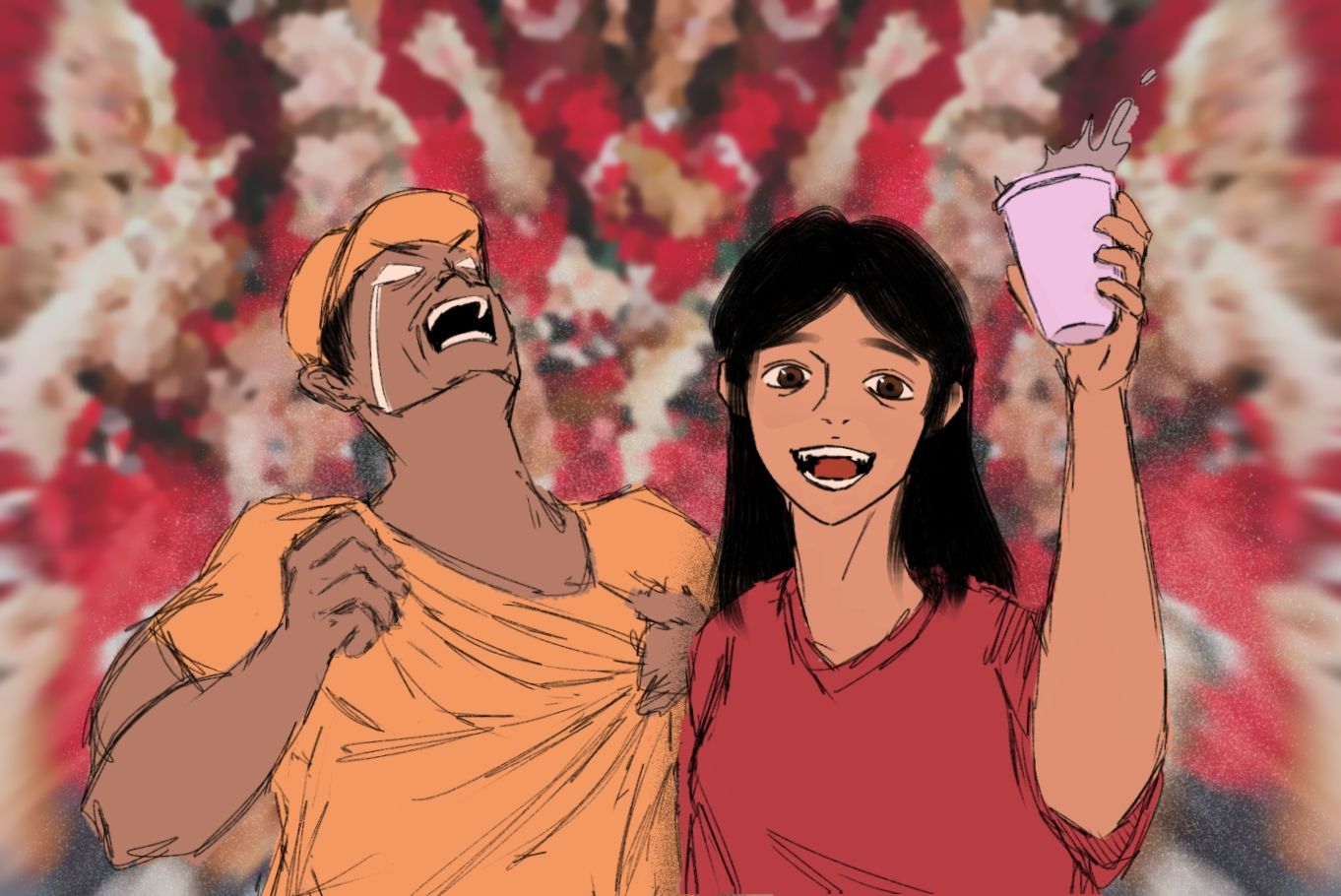
Where were you on Saturday, June 13, 2026? What did you hear the moment the clock ran out and the New York Knicks finally ended their 53-year championship drought? Screams from people of all ages and car horns honking into oblivion? Or maybe firecrackers in the street, and perhaps, on top of that, a hoarse, screamed rendition of “Empire State of Mind.” None of us had the exact same experience, but everyone’s was special. For a night, it didn’t matter what you thought of Mayor Mamdani’s policies; it just mattered that he had tweeted that there would be a ticker-tape parade that Thursday. It didn’t matter if you hadn’t even watched a Knicks game until the beginning of that week. New York was celebrating, and everyone was invited. We could use more moments like that.
A 2025 study by More In Common, a nonprofit that researches social division and aims to help Americans find unity, demonstrated that not only are sports a major source of connection and community, but they also serve society politically despite being non-politically affiliated. The study classified subjects as non-fans or low-, mid-, or high-value fans, and surveyed them about how often they participated in various civic activities and how they felt about various statements relating to politics, democracy, and community. It found that not only was sports fandom associated with being “less lonely, more active, and more connected to [family],” fans were also more likely to be registered to vote, follow politics closely, and participate in local elections when compared to non-fans. The study measured “political, civic, and community engagement” through the percentage of subjects from each group that had participated in a given activity (for example, calling a state- or federal-level representative, donating to an advocacy group/political organization, and donating blood). High- and mid-value fans were consistently more likely to have participated in the given activity than non-fans.
Furthermore, the stronger a fan someone is, the more likely they are to be interested in conversation and working towards mutual goals with “someone who has political views that are different from [their own].” This is because when fans find people who disagree with them within their pre-existing sports fandom community, they are less likely to immediately discount that person’s opinions because they already share an identity. Common ground leads to conversation, and conversation leads to a realization that we share more than what divides us. That realization also carries over into interactions outside of the sports community, making fans overall more open to cross-partisan interaction. This is the opposite of the general trend: typically, Americans who are more politically engaged are more likely to distrust and misunderstand those who disagree with them.
So why is sports fandom specifically so special? First, sports are an intergenerational interest, and political views tend to vary more between different ages, so sports communities are naturally composed of fans with diverse beliefs. Second, sports communities rely on in-person social connection. Yes, sports fans can interact over social media, but most people love sports because of the community gatherings that come as a result of them, whether that be attending a live game or watching it from a bar or watch party. When conversations about politics naturally come up, fans will be more likely to hear out the other person because the online disinhibition effect (acting out more frequently or intensely than one would in person), which occurs online, will not influence them. Fan communities that are largely online will be more influenced by this effect simply because social media is their main facilitator of interaction. Furthermore, such beneficial in-person interactions between community members who wouldn’t otherwise interact are especially likely within sports communities because sports fanbases are geographically concentrated. Sports fandom not only brings people together, but does so in a way that is more likely to result in positive connection, such as civic discourse or otherwise, than in hostility.
Connecting with other people through sports, a neutral point of common ground, forces citizens to remember that we are more than just our political identities. We are also Yankees fans (or Mets fans, but I hope not), New Yorkers, and, most importantly, humans. It may seem counterintuitive, but it’s true: political societies need non-political spaces.
This is not to say that political activism is not important, nor to suggest that it does not also create positive change. Take, for example, the political activism of singer-songwriter Olivia Rodrigo: she recently founded Daisy Chain Fields, a music festival with an all-female lineup inspired by Lilith Fair, which raised a total of $20 million that was split across 10 charities. The experience of being a fan of Rodrigo is intertwined with her activism and beliefs: at her last concert tour, she invited the National Network of Abortion Funds to set up booths in the stadiums where she played, and net ticket proceeds were donated to her initiative, Fund 4 Good, which supports women’s charities. Fans of Rodrigo find a united identity in her music, but also in political togetherness and, if they subscribe to her beliefs, fulfillment in feeling like they are contributing to change.
America must recognize that both kinds of spaces are necessary. It is incorrect to suggest that a politically affiliated fan community like Rodrigo’s is not valuable. Artists and other high-profile figures with large fan bases should not be expected to “stay out of politics.” It is their right to use their platform to speak out about what they believe in in an attempt, successful or not, to make change. It is also incorrect to suggest that all communities should be used for activism. Amidst a cultural shift towards what we perceive as more extreme political polarization (but is often not as bad as we think), many Americans have come to view the choice by organizations and celebrities with influence to remain politically unaffiliated as a choice that harms our democracy through complacency with injustice, but the opposite is true. The political non-involvement seen in sports organizations is essential to the civic engagement they end up inspiring. In these spaces, instead of feeling pressured to conform, fans feel freer to find unity themselves, politically or otherwise. It is vital that we are able to choose which political beliefs we subscribe to and which we don’t, an ability that is a product of having an identity that is not derived solely from politics. Instead of calling upon such organizations and platform leaders to take a stance, we need to remember that, in not doing so, they are simply serving a different role in society.
Being an active citizen does not require making one’s entire life about politics, but it requires making the choice to participate in one’s government and in societal discourse because one wants to make their society better. A better society is a more united one, and community activities like watching sports remind us that we already do have more in common than what divides us. The Yankees are in a drought right now, but when they do finally win another World Series, I promise I won’t ask the person next to me at the watch party if they believe in standardized testing before I high-five them. We’ll both be screaming too loud to hear any answer they could give anyway.
The foundation of democracy is free speech, and with free speech comes civic discourse. Our government cannot be one that is of the people, by the people, and for the people if the people are not open enough to discuss with each other what they think that should look like. It is essential that we protect spaces that allow democracy to flourish simply by allowing their members to be free.
So if you are a fan of democracy, expand that fandom to sports: grab a foam finger and start cheering. I don’t care what you think of Mayor Mamdani; I know you love Jalen Brunson.